James Webb Space Telescope: Key Discoveries and Future Prospects
Introduction: Why the James Webb Space Telescope matters
The James Webb Space Telescope (JWST) is one of the most ambitious space observatories ever built. Launched on 25 December 2021 and operated by NASA with ESA and CSA partners, JWST observes primarily in the infrared to study the early Universe, the formation of stars and planets, and the atmospheres of exoplanets. Its capabilities are reshaping astronomical priorities and delivering data that are immediately relevant to researchers and the public alike.
Main body: design, instruments and scientific results
Design and mission profile
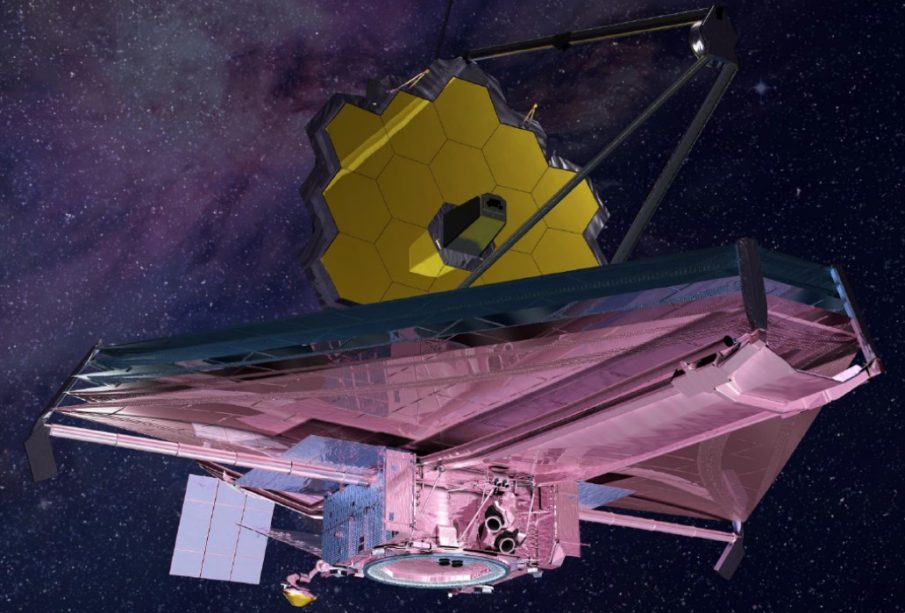
JWST sits near the Sun–Earth Lagrange point L2, roughly 1.5 million kilometres from Earth, where a stable thermal environment allows high-sensitivity infrared observations. Its 6.5-metre segmented beryllium primary mirror and a five-layer sunshield roughly the size of a tennis court enable detection of faint, redshifted light. The observatory covers wavelengths from about 0.6 to 28.5 micrometres and carries four main science instruments: NIRCam, NIRSpec, MIRI and the FGS/NIRISS, each tailored to imaging and spectroscopy across the infrared band.
Major scientific highlights
Since beginning science operations, JWST has produced deep-field images and spectra that reveal galaxies at very high redshift, including candidate systems beyond redshift 10. It has supplied detailed spectra of exoplanet atmospheres—showing water vapour and other molecules—and imaged protoplanetary discs with unprecedented clarity, tracing structures associated with planet formation. The telescope has also observed Solar System objects, from the outer planets to small icy bodies, providing new thermal and compositional information. Early release science and subsequent programmes have sparked revisions to models of early galaxy growth, star formation and planetary atmospheres.
Data access and community impact
Many JWST observations are archived at the Mikulski Archive for Space Telescopes (MAST) and, after any proprietary periods, are available to the global community. The observatory’s results are driving follow-up studies with ground-based telescopes and planning for future missions, while training a new generation of astronomers in infrared techniques.
Conclusion: significance and outlook
JWST is designed to deliver at least a decade of scientific operations and has already transformed several areas of astrophysics. Ongoing surveys and targeted programmes will refine our picture of the first galaxies, the physics of star and planet formation, and the chemistry of exoplanet atmospheres. For readers, the telescope promises a steady stream of striking images and discoveries that will deepen our understanding of the cosmos and inform the next wave of space observatories.


