How the world’s tallest buildings are shaping cities and design
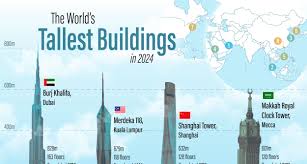
Introduction: Why the world’s tallest buildings matter
The world’s tallest buildings have long captured public attention as symbols of technical achievement, economic confidence and urban ambition. Their relevance extends beyond height: these structures influence city skylines, local economies, planning priorities and debates about sustainability and liveability. As cities grow and competition for prestige buildings continues, understanding the drivers and consequences of supertall construction is increasingly important for policymakers, developers and residents.
Main developments and trends
Engineering and design evolution
Advances in materials, structural engineering and wind modelling have enabled ever-taller buildings to be feasible in a wider range of locations. Innovations in stacked uses, slender forms and tuned mass dampers have allowed designers to reconcile extreme height with occupant comfort and safety. At the same time, architects are seeking to balance vertical ambition with contextual sensitivity, integrating public spaces and heritage considerations into high-rise schemes.
Urban and economic impacts
Supertall towers often function as mixed-use hubs, combining offices, residences, hotels and retail. Proponents argue they can concentrate activity and reduce urban sprawl; critics point to challenges such as congestion, strain on local infrastructure and the risk of creating exclusive enclaves. Financing models and property markets also shape which projects proceed, with major developments typically tied to broader urban regeneration and investment strategies.
Sustainability and resilience
Environmental performance is now a central concern in new tall buildings. Developers and city authorities are incorporating energy-efficient systems, water management and low-carbon materials to reduce operational impact. Resilience to climate risks—particularly wind, heat and extreme weather—has become a key design criterion, as has the need for robust safety and evacuation planning.
Conclusion: What to watch next
Looking ahead, the future of the world’s tallest buildings will be shaped by a mix of technological innovation, market demand and regulatory choices. Observers should watch how sustainability measures, mixed-use programming and community integration are implemented in new projects, and how cities balance prestige developments with broader housing and infrastructure needs. For readers, the continued evolution of supertall architecture offers a lens on how cities adapt to growth, investment and environmental imperatives.


