Curling Scoring: Rules, Terms and How Points Are Awarded
Introduction: Why curling scoring matters
Curling scoring is central to understanding outcomes in a sport that blends strategy, precision and teamwork. Whether you are a new spectator at an international championship or a club player learning match tactics, knowing how points are awarded and what common terms mean helps follow the game and appreciate strategic choices such as when to play defensively or pursue multi-point ends.
Main body: How scoring works
Counting the score after an end
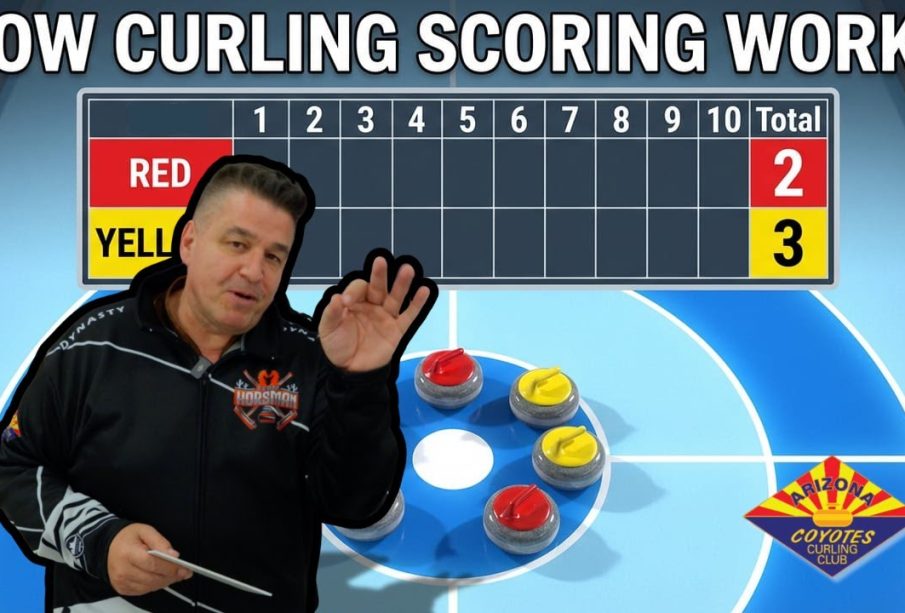
An end is the curling equivalent of an inning. Each team delivers eight stones in standard four-player play. After all stones have come to rest, only stones that lie in or touching the house (the 12-foot diameter circle) are eligible to score. The team with the stone closest to the button (the centre of the house) scores one point for each of its stones that are closer to the button than the opponent’s nearest stone.
Examples and limits
If a team has the three closest stones, that team scores three points for the end. The theoretical maximum score in a single end is eight, if all eight of a team’s stones are closer than any opponent stone, though such results are rare at higher levels.
Key rules that affect scoring
Delivery rules influence scoring opportunities. A delivered stone must be released before it reaches the near hog line; otherwise it is removed as a foul. Stones that do not reach the far hog line are generally taken out of play. When measurement is needed to determine which stone is closer to the button, officials use a measuring device.
Strategic terms
The team with the last stone advantage is said to have the hammer and is more likely to score multiple points. A blank end occurs when neither side has a stone in the house at the conclusion of the end; the team with the hammer typically keeps it. A steal happens when the team without the hammer scores.
Conclusion: Significance and what to watch for
Understanding curling scoring clarifies why teams choose certain tactics, such as blanking an end to retain the hammer or playing aggressively to build a big end. For viewers and players, recognising terms like hammer, steal and blank end makes the sport more engaging and reveals the strategic depth behind each shot.

