Understanding the FIFA Women’s World Cup UEFA qualifiers
Introduction: Why the UEFA qualifiers matter
The FIFA Women’s World Cup UEFA qualifiers are a central pathway through which European national teams earn the right to compete on football’s biggest stage. Beyond determining which teams represent Europe at the World Cup, the qualifiers have become a focal point for investment, development and growing public interest in the women’s game. For players, coaches and supporters, qualification campaigns shape national programmes and influence long-term planning.
Main body: Format, competition and consequences
Structure of the competition
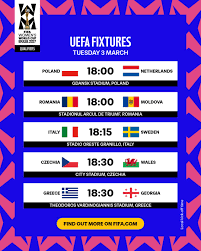
UEFA organises a qualification cycle in which its member associations compete over a series of scheduled fixtures. Teams are typically drawn into groups and play home-and-away matches, collecting points to determine group standings. Where necessary, additional playoff matches decide which teams progress to the World Cup finals. The precise format — group sizes, playoff structure and the number of European places — is determined by FIFA and UEFA for each World Cup cycle.
On-field and off-field impacts
Results in the qualifiers affect national rankings, seeding for future tournaments and the profile of women’s football in each country. Strong qualifying campaigns can accelerate domestic investment, increase media coverage and create opportunities for players to move to higher-level club competitions. Conversely, missed qualification can trigger reviews of coaching structures, youth development and funding priorities.
Competitive dynamics
UEFA’s qualifiers regularly feature a mix of established national powers and emerging teams. This mix can produce both predictable outcomes and surprising results, reflecting the broader growth and professionalisation of women’s football across Europe. Competitive balance has increased as more nations develop structured domestic leagues and talent pathways.
Conclusion: What readers should take away
The UEFA qualifiers for the FIFA Women’s World Cup offer more than a route to a global tournament: they act as a barometer of progress in European women’s football. For fans and stakeholders, following qualification campaigns provides insight into which nations are advancing and where investment is having an effect. Looking ahead, continued attention to the qualifiers — from broadcasters, federations and supporters — will shape how the women’s game develops regionally and how Europe is represented on the World Cup stage.