How Blockchain Technology Is Shaping Industry and Policy
Introduction: Why blockchain technology matters
Blockchain technology has moved from niche experimentation to a core area of interest for businesses, regulators and governments. Its potential to provide tamper‑resistant records, enable programmable transactions via smart contracts and support new models of tokenisation has broad relevance across finance, supply chains, public services and digital identity. Understanding recent developments is important for organisations planning investment, and for citizens affected by changes in data use and financial services.
Main developments and facts
Enterprise and sector adoption
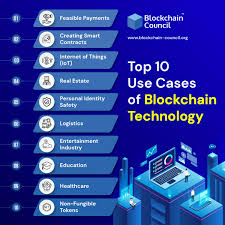
Organisations are piloting and, in some cases, deploying distributed ledger solutions to improve traceability and reduce reconciliation work. In supply chains, blockchain is used to record provenance and reduce fraud; in finance, it underpins tokenised assets and faster settlement options. Public sector bodies are testing digital identity schemes and document verification on distributed ledgers to streamline services.
Technical progress
Advances in consensus mechanisms and scaling approaches aim to address long‑standing limitations. Proof‑of‑stake and other less energy‑intensive consensus methods have reduced the environmental footprint compared with earlier proof‑of‑work systems. Layer‑2 scaling and interoperability projects seek to increase transaction throughput and enable different networks to communicate, making practical deployments more feasible.
Regulation and oversight
Policymakers are increasingly focused on consumer protection, anti‑money laundering and market integrity. Regulatory activity is creating clearer expectations for firms offering crypto‑related services and for tokenised financial products. At the same time, central banks continue to research and pilot central bank digital currencies (CBDCs), which may use distributed ledger concepts in some implementations.
Challenges that remain
Adoption hurdles include technical complexity, governance questions, legal clarity over smart contracts and standards for interoperability. Organisations must also weigh privacy needs against the transparency that distributed ledgers provide and manage operational and cyber security risks.
Conclusion: Outlook and significance for readers
Blockchain technology is unlikely to be a single, disruptive overhaul; instead, expect incremental integration into systems where its properties deliver clear benefits. For businesses and consumers, the short to medium term will bring more pilot projects, growing regulatory clarity and continued technical improvements that make practical use‑cases more common. Staying informed will help organisations evaluate opportunities and risks as the technology matures.





