Iftar Time Today: Where to Check Accurate Local Times
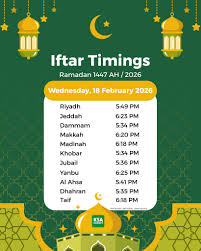
Introduction: Why iftar time today matters
Knowing the iftar time today is vital for millions observing the fast during Ramadan and for anyone coordinating communal meals, mosque announcements or hospitality. Iftar marks the end of daily fasting and coincides with sunset, making accurate local information important for religious practice, community planning and health considerations.
Main body: How iftar times are determined and where to check
What “iftar” means and the astronomical basis
Iftar begins at Maghrib, the Islamic sunset time. Astronomically, this is when the upper limb of the sun disappears below the horizon. In practice, many communities use the official local sunset time to determine when the fast may be broken.
Local variation and time‑zone effects
Iftar time today varies by location and date because of longitude, latitude, and the progression of the seasons. Daylight saving changes in some countries can also shift the clock time of sunset. This means a reliable local source is essential—times published for another city or country may be inaccurate for your area.
Reliable sources to check
Community members typically rely on local mosques or Islamic councils for published timetables. Other commonly used resources include recognised apps and websites that calculate prayer and sunset times, local newspaper listings, and municipal sunset tables. When following a calculation-based timetable, look for reputable methods and clear statements about whether times are adjusted for the local sighting or calculated astronomy.
Special cases and guidance
In very high latitudes where sunset or twilight behaves unusually, religious authorities often recommend specific conventions—such as following the nearest city with a normal day/night cycle or using a fixed percentage of the night. Always check guidance from recognised scholars or councils if you live in such regions.
Conclusion: Practical steps and significance for readers
To confirm iftar time today, consult your local mosque timetable, an established prayer‑time service or official community announcements. Set an alarm a few minutes after the published sunset to allow for local variation and to respect communal rulings. Accurate timing preserves religious observance, supports communal meals and helps individuals manage nutrition and well‑being during fasting.