Understanding the Championship Table: What It Shows and Why It Matters
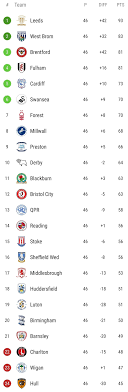
Introduction: Why the championship table matters
The championship table is the primary snapshot of a league season, summarising form, results and standings. For clubs, managers and supporters it determines promotion and relegation, seeds for play-offs and often influences financial and sporting decisions. Understanding how a championship table is constructed and interpreted helps readers follow a season with greater clarity and perspective.
What a championship table shows
A typical championship table lists each club alongside a set of standard statistics: matches played (P), wins (W), draws (D), losses (L), goals for (GF), goals against (GA), goal difference (GD) and total points (Pts). These figures are updated after every fixture to reflect the latest results. Tables can be presented in full or filtered by home and away records, recent form, or head-to-head records for particular matchups.
How points are calculated
Most football leagues award three points for a win, one point for a draw and zero points for a loss. Teams are ranked primarily by total points. When clubs are level on points, leagues apply tie-breakers such as goal difference, goals scored or head-to-head records to determine positions.
Tie-breakers, play-offs and other rules
Tie-breaker rules vary by competition. Common methods include:
- Goal difference (GD) — subtracting goals conceded from goals scored;
- Goals scored (GF) — rewarding attacking output;
- Head-to-head record — comparing results between the tied teams;
- Play-offs or a deciding match in some competitions if positions carry major consequences.
Additionally, fair play rankings or disciplinary records can occasionally be used as secondary criteria. The structure of promotion and relegation — automatic places and play-off spots — is another critical feature determined by the championship table.
Why readers should care
For fans, the championship table frames the narrative of a season: form, momentum and danger. For clubs, final positions influence finances, recruitment, sponsorship and long-term planning. Media and analysts use table metrics to assess performance trends and predict outcomes as the season progresses.
Conclusion: Reading the table for insight
The championship table is more than a list of numbers; it is the season’s scoreboard and one of the clearest indicators of future consequences for clubs. Regularly checking the table, understanding tie-breakers and noting deeper statistics such as goal difference or recent form will give readers a more accurate grasp of where teams stand and what to expect as the campaign unfolds.





