Northern line: Key facts and current significance
Introduction: Why the Northern line matters
The Northern line is a central artery of the London Underground network, linking multiple north and south suburbs with London’s financial, educational and cultural districts. Its importance lies in both daily commuter flows and visitor travel, connecting key interchanges that support the capital’s economy and mobility. Understanding the line’s route, structure and role helps readers appreciate its impact on journeys across the city.
Main body: Route, structure and operational role
Route and branches
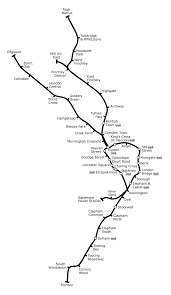
The Northern line operates multiple branches in the north that feed central London and then continue south to Morden. It includes the High Barnet and Edgware northern branches, with a short Mill Hill East spur. In central London the line divides into two distinct central branches — commonly referred to as the Bank branch and the Charing Cross branch — which serve different tunnels through the centre before rejoining towards the southern terminus. This branching pattern gives the line broad coverage across many boroughs.
Interchanges and connectivity
The Northern line serves major transport hubs and interchange stations where passengers can transfer to national rail, Eurostar, other Underground lines and bus services. Stations on the line provide connections that are essential for commuters, students and tourists, helping to distribute passenger flows across the wider transport network.
Heritage and operations
Historically, parts of the Northern line trace back to some of the earliest deep-level electric railways in London. Today it is operated by London Underground and remains one of the network’s busiest lines. As a deep-level tube, it uses smaller-diameter tunnels and rolling stock designed for high-frequency urban service.
Conclusion: Current significance and outlook
The Northern line will continue to be central to London’s transport resilience as travel demand evolves. Ongoing network maintenance, targeted upgrades and operational planning by transport authorities aim to improve capacity, reliability and passenger experience. For everyday travellers and visitors, the line’s mix of northern branches and central tunnels ensures it remains a vital link across the capital, shaping commuting patterns and supporting London’s economic and social activity.





