How the world’s tallest buildings are reshaping skylines
Introduction: Why the world’s tallest buildings matter
Tall buildings are visible symbols of economic ambition, engineering progress and urban change. The world’s tallest buildings attract tourists, host businesses and test new standards in safety, sustainability and mixed‑use design. As cities compete for skyline prominence, tracking the tallest structures offers insight into where investment, technology and planning are converging.
Main developments and current standings
Current rankings and notable towers (as of 2024)
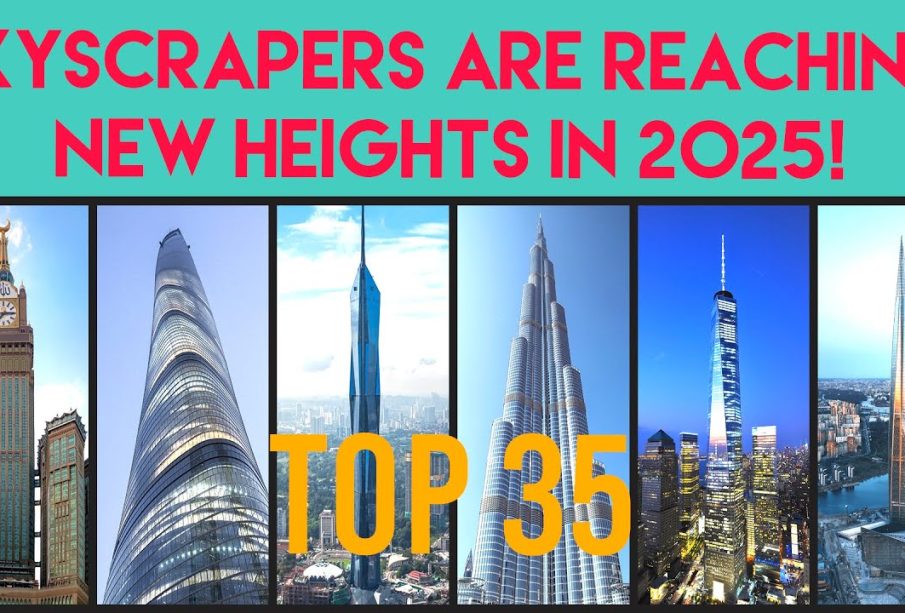
The Burj Khalifa in Dubai remains the world’s tallest building at 828 metres, a benchmark in supertall construction since its completion. Close behind are the Shanghai Tower in China at 632 metres and the Abraj Al‑Bait Clock Tower in Makkah at about 601 metres. Other leaders include the Ping An Finance Centre in Shenzhen (599 metres) and Seoul’s Lotte World Tower (555 metres). One World Trade Center in New York, often cited for its symbolic height, reaches 541.3 metres to its architectural tip. Several 500‑metre‑plus towers such as the Guangzhou and Tianjin CTF Finance Centres (around 530 metres) round out the list of global megatalls.
Projects and paused ambitions
Ambitious projects continue to be proposed, with Jeddah Tower in Saudi Arabia conceived to exceed 1,000 metres. Construction of Jeddah Tower has been paused for several years, underscoring the financial and logistical challenges of kilometre‑high structures. Developers and city authorities increasingly weigh the prestige of extreme height against costs, delivery risk and local planning priorities.
Trends, implications and innovations
Recent trends emphasise mixed‑use programmes that combine offices, residences and hotels within supertall footprints, improving economic resilience. Engineering advances — in wind engineering, high‑strength materials and vertical transportation — continue to enable taller, more efficient towers. Sustainability is rising on the agenda: designers are integrating energy‑saving façades, water recycling and localised microgrids to reduce operational footprint.
Conclusion: What readers should watch
The hierarchy of the world’s tallest buildings is likely to evolve slowly. While iconic, extreme‑height projects face growing scrutiny over cost and sustainability, innovation continues at the upper reaches of skylines. For urban planners, investors and the travelling public, the tallest towers will remain barometers of regional ambition and technological capability — even as the future may favour smarter, greener vertical development over simply taller structures.





