How the Champions League format works in the new League Phase
Introduction
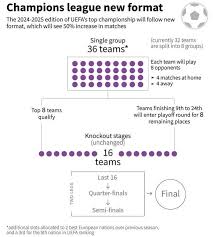
The champions league format has been overhauled for the post-2024 era, replacing the traditional group stage with a single 36-team league phase. This change is important for clubs, broadcasters and supporters because it alters the number of matches, the way opponents are determined and how the knockout bracket is built. Understanding the new structure helps readers follow fixtures, seeding and the timing of decisive draws.
Main body
League Phase and fixtures
Under the new format, 36 teams compete in a single league phase rather than in multiple groups. Each team will play eight matches in this phase, a shift from the previous model where teams faced three opponents twice. The revised schedule is intended to increase variety of opponents and provide more fixtures across the season.
Knockout draws and bracket building
The League Phase also changes how the knockout rounds are prepared. UEFA now uses league rankings to build the bracket, which reduces the number of draws required. Only two draws are needed: one for the knockout phase playoffs on 30 January and another for the round of 16 on 27 February. This contrasts with the former approach of staging draws throughout the knockout rounds.
Imbalance and practical effects
The new method of constructing the bracket from league rankings has already produced discussion. In the second season of the League Phase format, instances have arisen where final tie arrangements created perceived imbalances. A notable example involved Arsenal and Paris Saint-Germain: Arsenal were placed 3rd in the League Phase while PSG finished 15th, yet Arsenal played the second leg of their semifinal in France. UEFA’s decision not to re-rank each tie solely on League Phase placings — and instead give priority to teams that knocked out ranks 1–4 — can produce an additional split in the knockout bracket and outcomes that some clubs regard as unfair.
Conclusion
The champions league format now centres on a 36-team league phase with eight matches per team and a streamlined draw process. While the format creates fresh fixtures and simplifies certain procedural elements, its bracket-building rules have sparked debate about balance and fairness. Fans and clubs should expect ongoing discussion and possible refinements as the competition progresses through its early seasons under this arrangement.





