The Rising Issue of Ghost Plates in the UK
Introduction
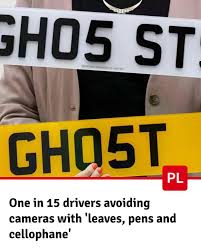
The emergence of ‘ghost plates’ has become a significant concern for law enforcement and the general public in the UK. These are fake vehicle registration plates that are often used by criminals to evade detection while committing offences. The illegal use of ghost plates not only complicates law enforcement efforts but also raises serious questions about vehicle ownership integrity and road safety.
What Are Ghost Plates?
Ghost plates are essentially fraudulent number plates that can be easily created using inexpensive technology. Criminals typically use these plates to mask the identity of vehicles involved in illicit activities, ranging from theft and drug trafficking to more serious crimes such as human trafficking. They might also be used by offenders to avoid fines related to congestion charges or speeding tickets.
The Law and Enforcement Challenges
According to the Driver and Vehicle Licensing Agency (DVLA), the use of ghost plates is illegal under the Road Traffic Act, and anyone found using them can face substantial fines and penalties. However, identifying ghost plates poses a challenge for law enforcement. Traditional methods of plate recognition can be bypassed, making it harder to trace the vehicle back to its owner.
Recent Incidents and Legal Actions
Police forces across the UK have reported a surge in incidents involving ghost plates. For instance, in August 2023, a notable case involved a vehicle linked to a series of high-speed chases that was identified as having ghost plates. While the police managed to apprehend the offenders, the incident highlighted the increasing sophistication of criminal organisations employing these tactics. Additionally, the government has initiated measures to tighten regulations on number plate suppliers to prevent the production of fraudulent plates.
The Future and Prevention
Law enforcement agencies emphasise the importance of public awareness in combating the use of ghost plates. Vehicle owners are encouraged to report any suspicious activities involving vehicles with unfamiliar or mismatched registration numbers. Furthermore, technological advancements such as enhanced Automatic Number Plate Recognition (ANPR) systems are being developed to better identify and track these illicit vehicles.
Conclusion
Ghost plates represent a growing challenge that not only affects road safety but also undermines the integrity of vehicle registration systems in the UK. As criminal tactics evolve, it is crucial for both law enforcement and the public to stay vigilant. With increasing public awareness and technological advancements, there is hope that the tide can be turned against this illegal practice, leading to safer roads and a more accountable vehicle ownership system.