Understanding Spinning Cosmic Filament Structures
The Importance of Cosmic Filament Structures
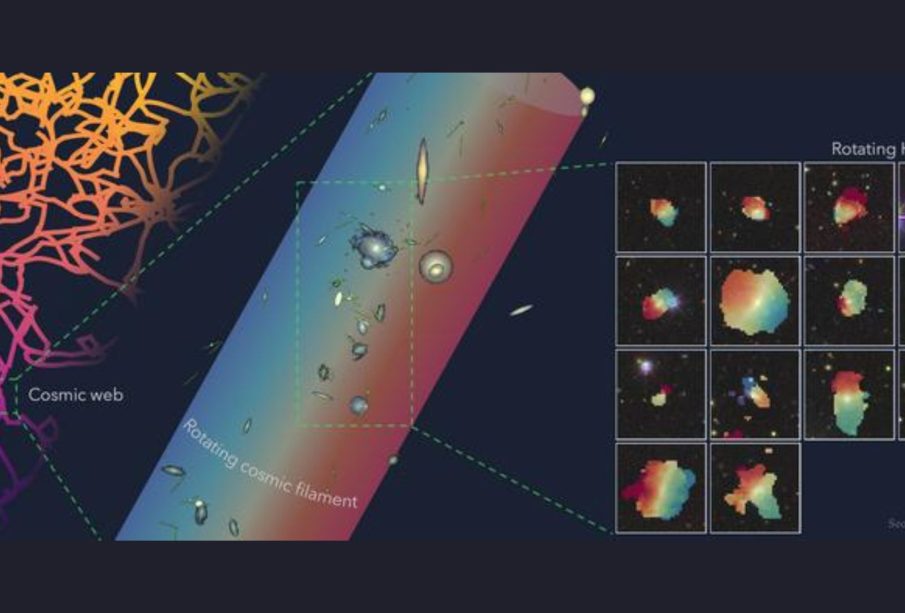
In the vast expanse of the universe, cosmic filaments play a crucial role in the structure and evolution of galaxies. These enormous, thread-like formations of dark matter and gas are part of the cosmic web, which serves as the backbone of the universe, influencing galaxy formation and providing insights into the nature of dark matter.
What Are Spinning Cosmic Filament Structures?
Cosmic filaments are vast structures that form through gravitational attraction, connecting clusters and superclusters of galaxies. Recent studies have identified that these filaments can exhibit spinning properties, leading to the formation of complex phenomena such as star formation in galactic halos. The intricate dance of these structures is crucial for understanding how matter is distributed throughout the universe.
Recent Discoveries and Events
A recent study published in the Astrophysical Journal highlighted the discovery of a specific spinning filament located in the Perseus-Pisces Supercluster, one of the most widely studied regions in the universe. Using advanced simulation techniques and data from telescopes, astronomers have begun to unravel the dynamics of these spinning structures. This discovery not only confirms previous theories regarding dark matter’s influence but also opens new avenues for understanding how kinetic energy is transferred throughout galaxies.
Implications for Cosmology and Future Research
The identification of spinning cosmic filaments paves the way for enhanced models of cosmic evolution. Researchers argue that these structures could significantly impact our comprehension of galaxy formation timelines and the overall lifecycle of the universe. With current telescopes becoming increasingly sensitive, further exploration of spinning filaments will likely yield new evidence and a refined understanding of cosmic structures.
Conclusion
Spinning cosmic filament structures are more than just fascinating phenomena; they serve as key indicators of the universe’s behavior and evolution. As astronomers deepen their investigation into these structures, they not only enrich our understanding of the universe but also address fundamental questions regarding dark matter and its role in cosmic formation. The future of cosmology looks bright as new technologies and methodologies continue to uncover the complexity of our universe.